
The Ultimate Guide to Revolutionary War Sites in Charleston, South Carolina
Did you know that there were more Revolutionary War battles fought in South Carolina than in any other state? Over 200 battles were fought in both the Upcountry and Lowcountry regions of The Palmetto State, including the Charleston area. If you’re a Revolutionary War history buff (like me), here are 6 historical sites you need to visit on your getaway to Charleston.
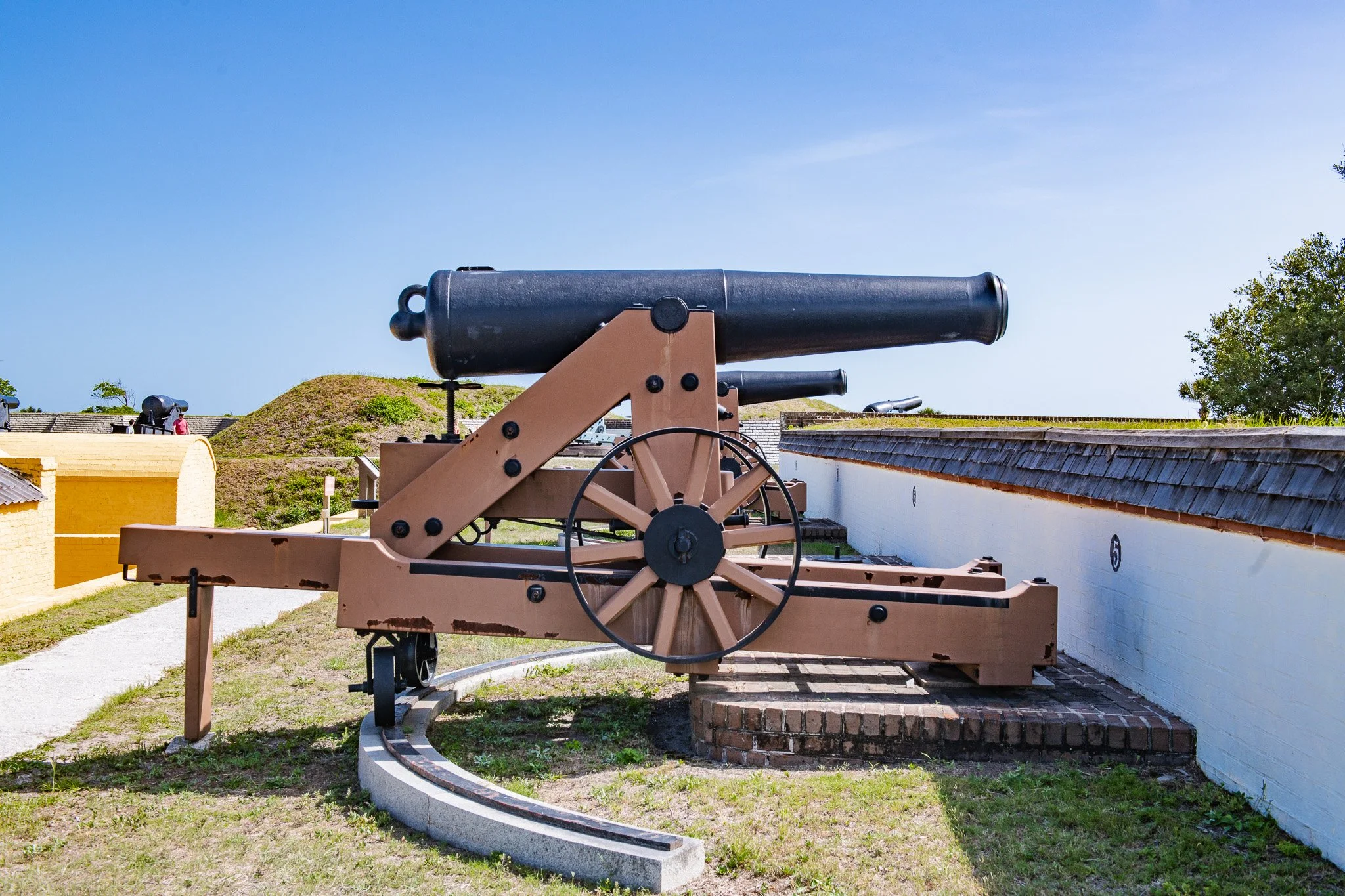
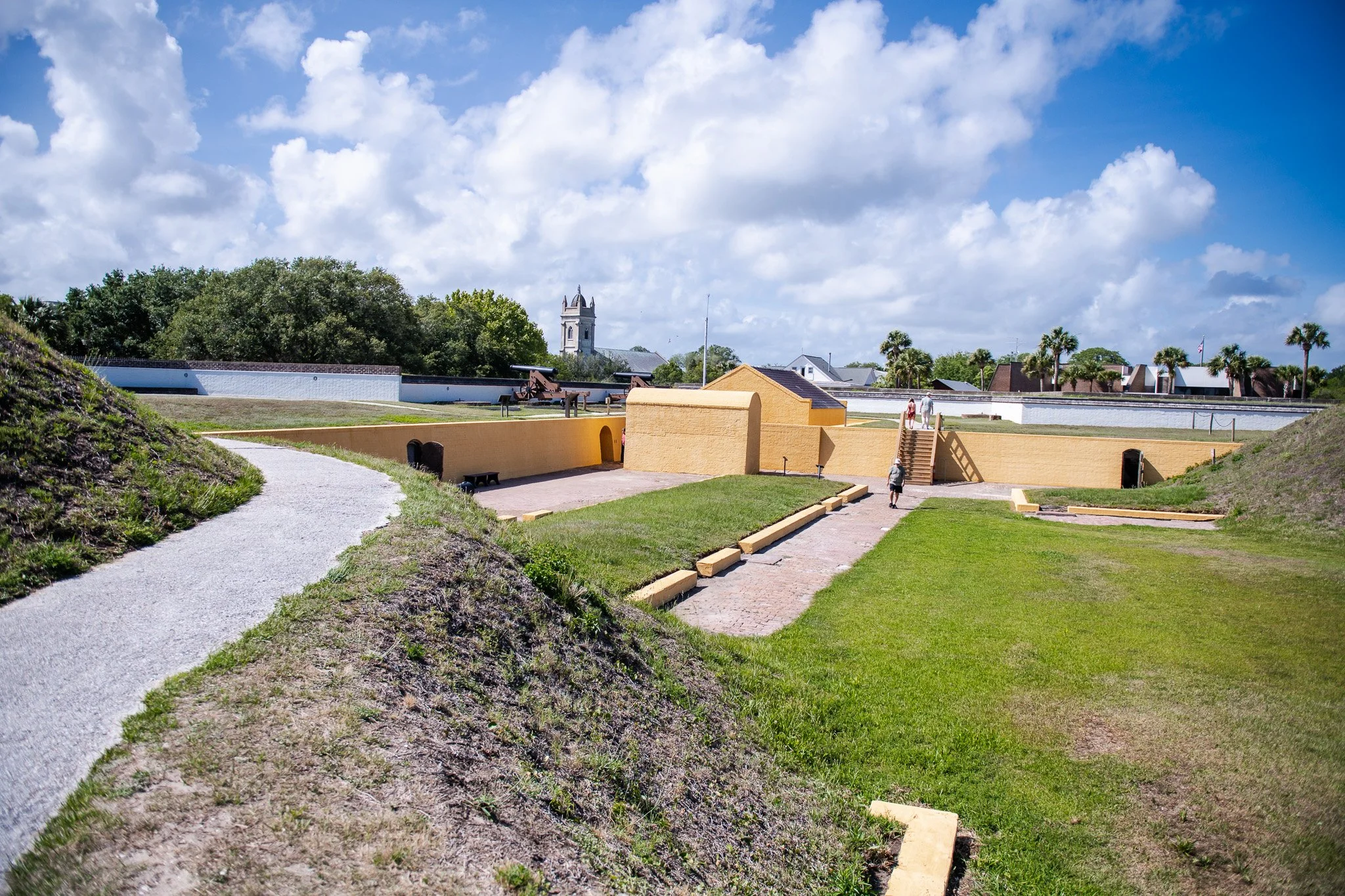
Fort Moultrie
Since early European settlers first settled on the coast of North America, coastal fortifications have guarded the shores and harbors. In 1776, Colonel William Moultrie was in charge of the fort on Sullivan’s Island. When nine warships of the British Royal Navy attacked Fort Moultrie (then named Fort Sullivan) on June 28, 1776, the palmetto log fort was still incomplete. The seaward-facing front and corner bastions were complete, but the rear walls remained drastically unfinished, standing at only 7 feet tall. The patriots rapidly constructed as much of the fort as they could by raising two palmetto-log walls 16 feet apart and filling the space between the sand. This ended up being great for the fort as the spongy palmetto and yielding sand readily absorbed shot and shell from the British ships while protecting American defenders.
After a nine hour battle, the British ships were forced to retire and retreat. The garrison and its 31 assorted cannons had successfully defended Charleston with a limited supply of gunpowder and half a fort. For every fifty British fleet shots fired, Fort Sullivan fired but one, most of which proved deadly accurate on their targets. In the aftermath of the battle, the British had 93 casualties and 127 wounded while the Americans had 12 casualties and 25 wounded. The defense had been a major victory for the Americans in Charleston. Six days later, the Declaration of Independence was signed in Philadelphia and the South Carolina General Assembly renamed Fort Moultrie in honor of the commander of Fort Sullivan.
Fort Moultrie’s location has been key for centuries as it is well situated to guard Charleston Harbor. Near the harbor entrance, powerful shoals force ships to enter the harbor from the south and sail towards the fort on Sullivan’s Island. From this direction, approaching ships could not fire on the fort until they turned into the harbor, giving those in Fort Moultrie critical time to prepare to defend and attack.
Visitor Information
📅 Open daily from 9:00 am - 4:30 pm.
🎟️ Entrance Pass - $10 per person.
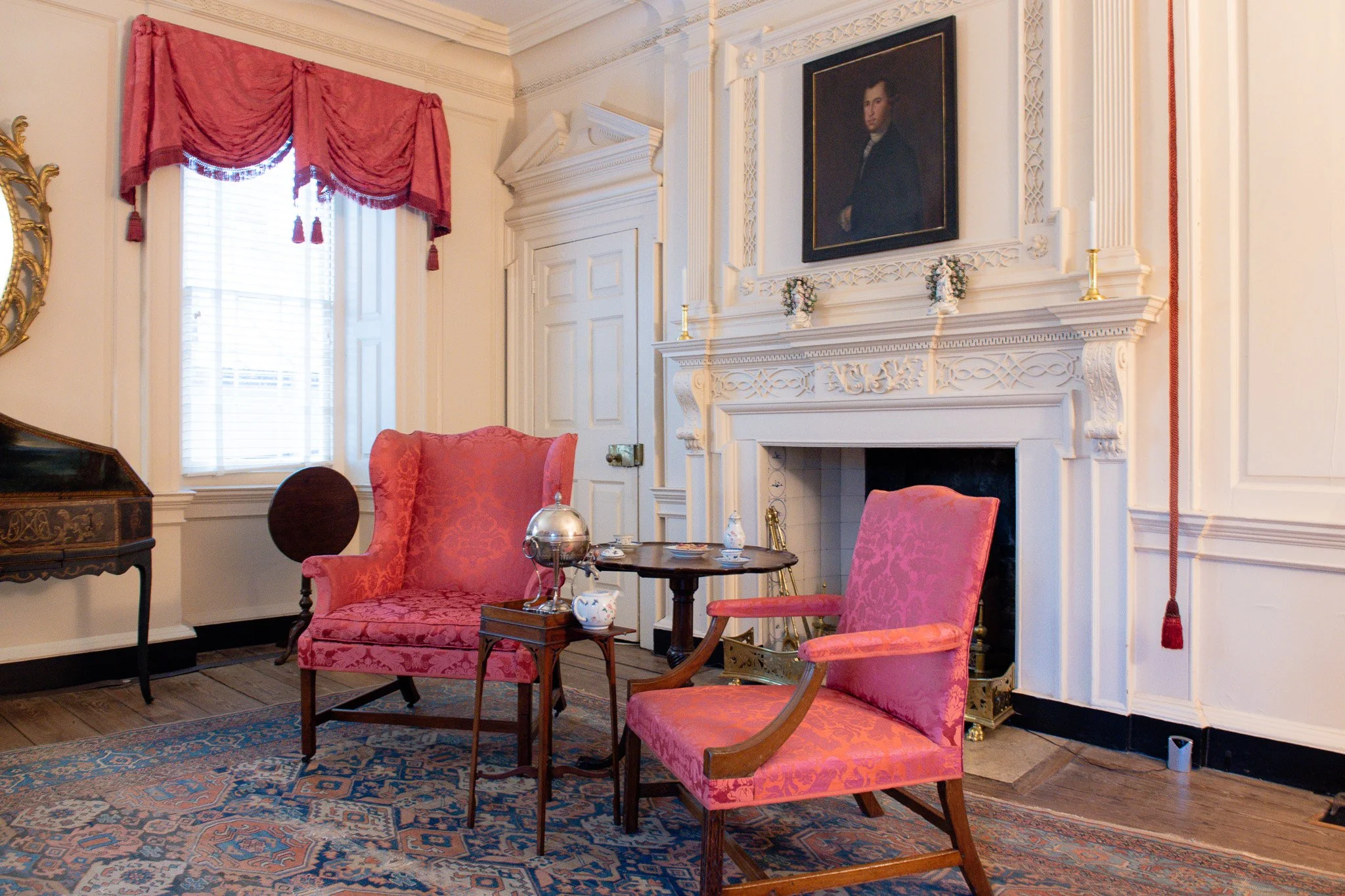
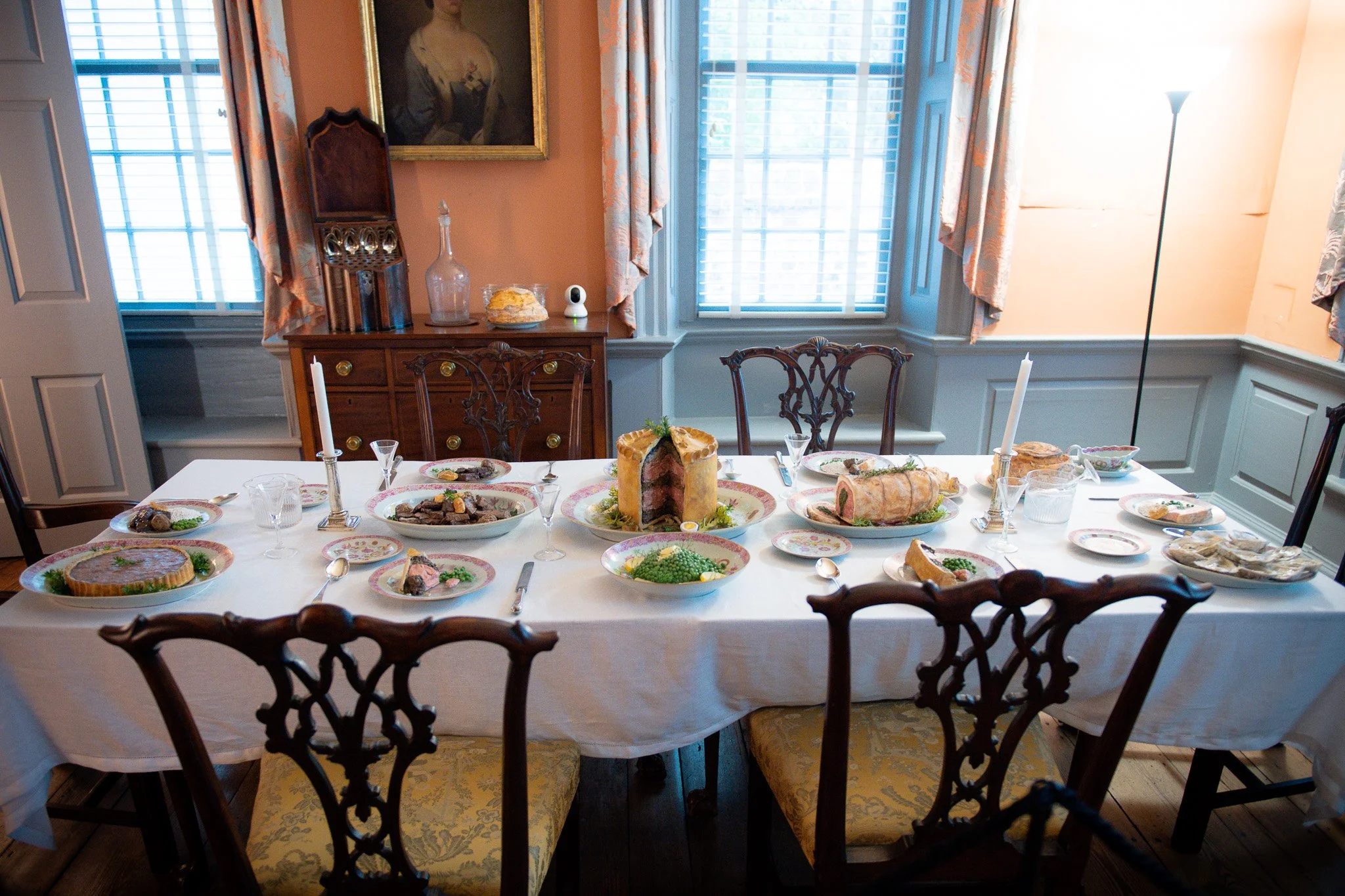
Heyward-Washington House
This Georgian-style double house was built in 1772 and offers visitors a glimpse into the fascinating nature of Charleston society during both the Revolutionary and Antebellum periods. Made for Thomas Heyward Jr., one of South Carolina’s four signers of the Declaration of Independence. During the Revolutionary War, Heyward Jr. fought at the Battle of Port Royal and the Siege of Charleston. After the city fell, he was imprisoned with other rebel leaders in St. Augustine, Florida. Freed in a prisoner exchange in 1781, Heyward returned to South Carolina after the war.
In addition to the prominent Heywards, this house and its other buildings were the home of multiple generations of enslaved people. The main house contains a stunning collection of historic Charleston-made furniture, including the priceless Holmes Bookcase, considered one of the finest examples of American-made colonial furniture. The kitchen building tells the story of the enslaved servants who worked and lived here.
When newly elected President George Washington traveled to South Carolina as a part of his historic tour to unite the young nation, he stayed at the Heyward house. Washington stayed in Charleston for one week After his stay, the name of the estate changed to Heyward-Washington House to reflect this historic occasion. In 1970, the Heyward-Washington House was designated a National Historic Landmark.
Visitor Information
📅 Open Monday - Saturday 10am - 5pm & Sunday 12pm - 5pm.
🎟️ Tickets are available through the Charleston Museum. They offer ticket packages depending on how many sites you wish to visit. These sites are The Charleston Museum, the Heyward-Washington House, and the Joseph Manigault House. The more sites you choose, the more you save.
1-Site Ticket: $15
2-Site Ticket: $22
3-Site Ticket: $30
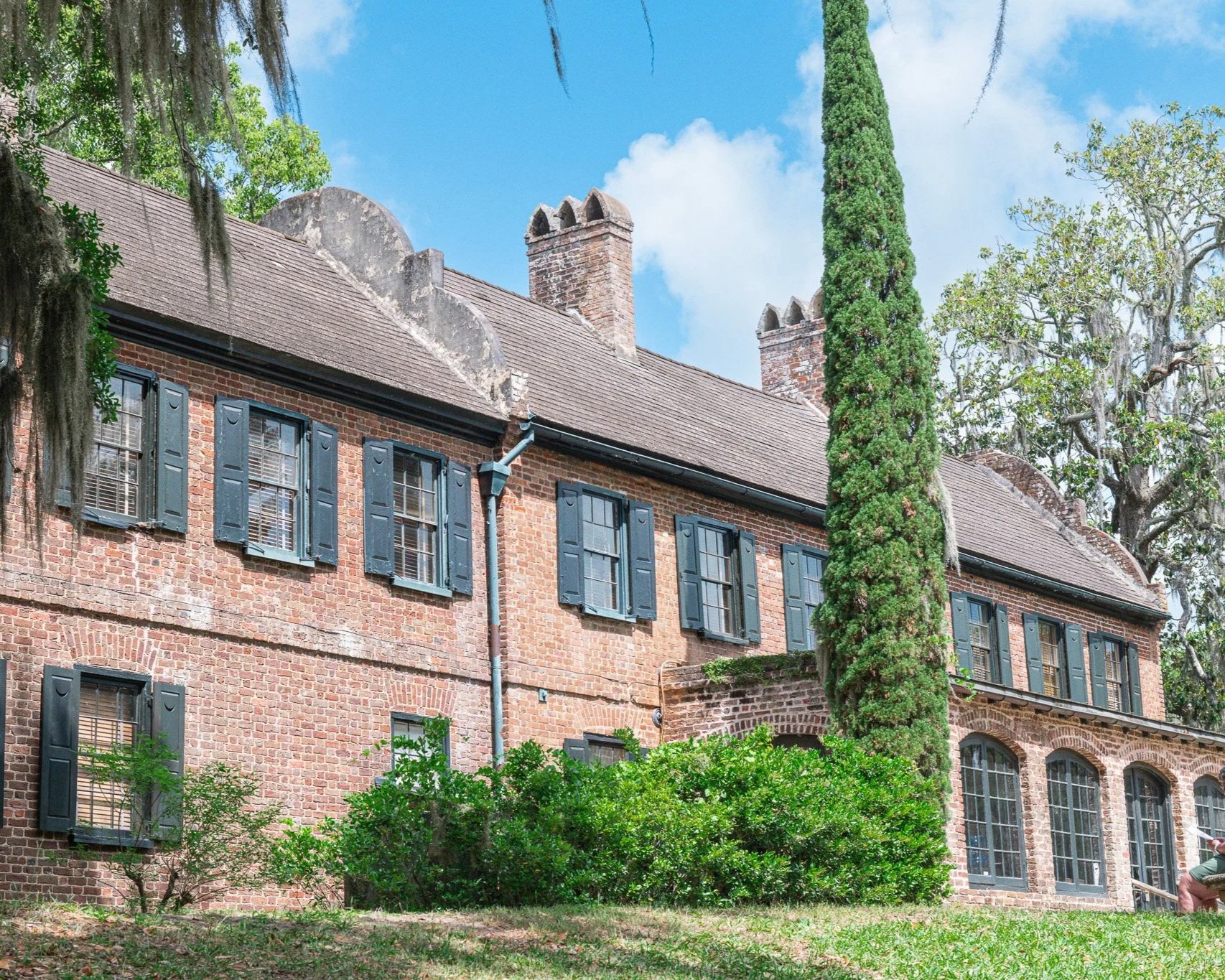
Middleton Place
Middleton Place was once the home of Founding Fathers, Statesman, and Diplomats, including one of the signers of the Declaration of Independence. For over two centuries, Middleton Place has been witness to the rich and complex history of the essential American experience. Today, this historic site focuses on major contributions of the Middleton family as well as the enslaved Africans who lived and worked here. Essentially, the stories are a microcosm of United States history; from the early Colonial period through the Revolution, the early Republic, the Civil War era and beyond, they made a mark on the land, the colony, state and nation.
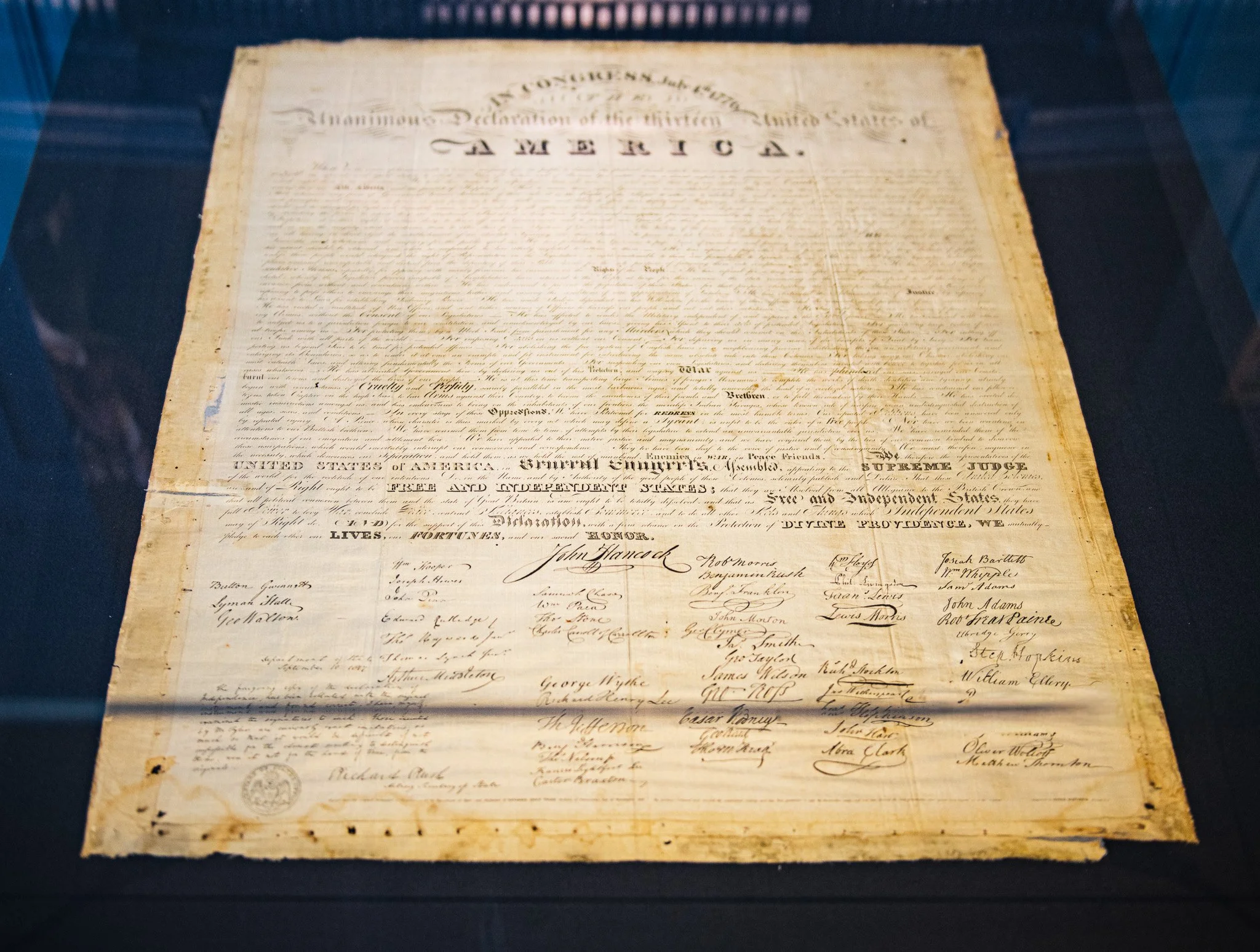
As part of America’s 250th Birthday Celebrations, Middleton Place opened a new exhibit, Conversations of Freedom: The American Revolution at Middleton Place. This self-guided exhibit explores Henry Middleton’s role in the American Revolution and the war’s impact on his family and the enslaved community at Middleton Place. Presented in the House Museum, this exhibit features beautiful 18th century textiles that belonged to the Middletons along with a rare silk edition of the Declaration of Independence. Period artwork and furniture from the collection lends authenticity and provides historical context.
Located along the Ashley River, Middleton Place is America’s Oldest Landscaped Gardens encompassing 110-acres. The Gardens were founded in 1741 when Henry Middleton married Mary Williams, the only daughter and heiress of John Williams, a wealthy landowner. Mary’s dowry included his house and the land that was to become Middleton Place. It was in that same year that Henry began to plan and build his grand garden. Today, the gardens contain some of America’s oldest camellias, crepe myrtles and tea olives creating floral allees and accenting terraced lawns, sunken gardens, and a pair of ornamental lakes shaped like butterfly wings.
Today, this National Historic Landmark is owned and operated by the Middleton Place Foundation, a non-profit educational trust. This organization’s mission is “to preserve this important site and connect people with the past, inspiring a deeper understanding of ourselves and each other through our shared American history.”
P.S. This historic site played a crucial role in the blockbuster hit “The Patriot,” which was loosely based on the life of the Revolutionary War hero Francis Marion.
Visitor Information
📅 Open daily from 9am - 5pm.
🎟️ Admission prices:
Adults (ages 14+) — $35
College Students (with Student ID) — $20
Children (ages 6–13) — $15
Children ages 5 & under — Free
Military (with ID) — $32
Senior (62+) — $32
The Old Exchange & Provost Dungeon
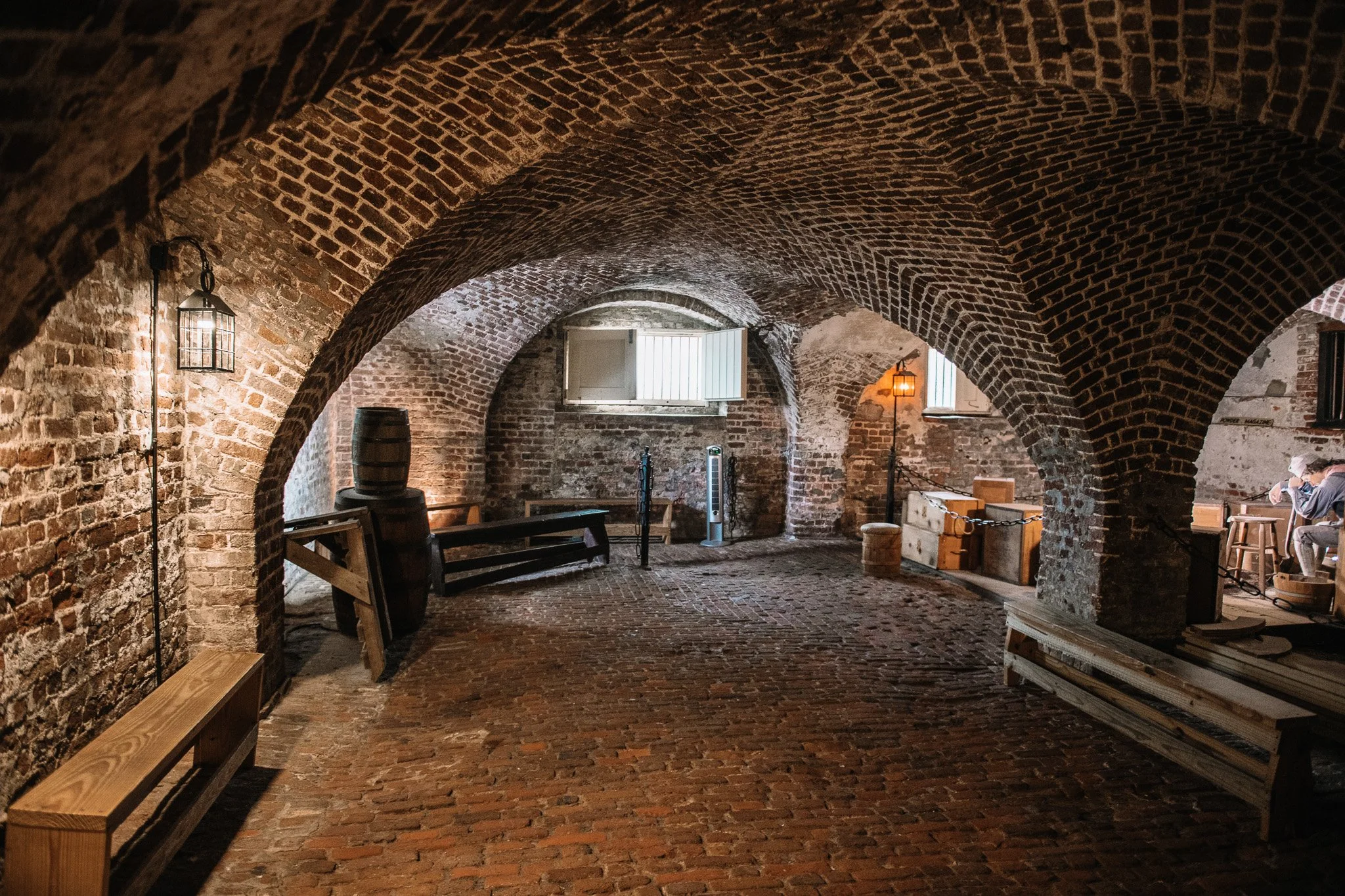
Built in 1771 as a Exchange & Customs House by the British, the Old Exchange and Provost Dungeon has been a Charleston landmark for nearly 250 years. Over the years, this building has been a commercial exchange, custom house, post office, city hall, military headquarters, and museum. During the Revolutionary War, the British forces converted the Exchange’s bottom floor into a military prison known as the Provost or “dungeon”. This dungeon and its harsh, inhumane conditions tormented American prisoners of war, rogue British soldiers, private citizens, and enslaved people. After the British surrendered to the Americans in 1783, the Building transformed into the political center of Charleston.
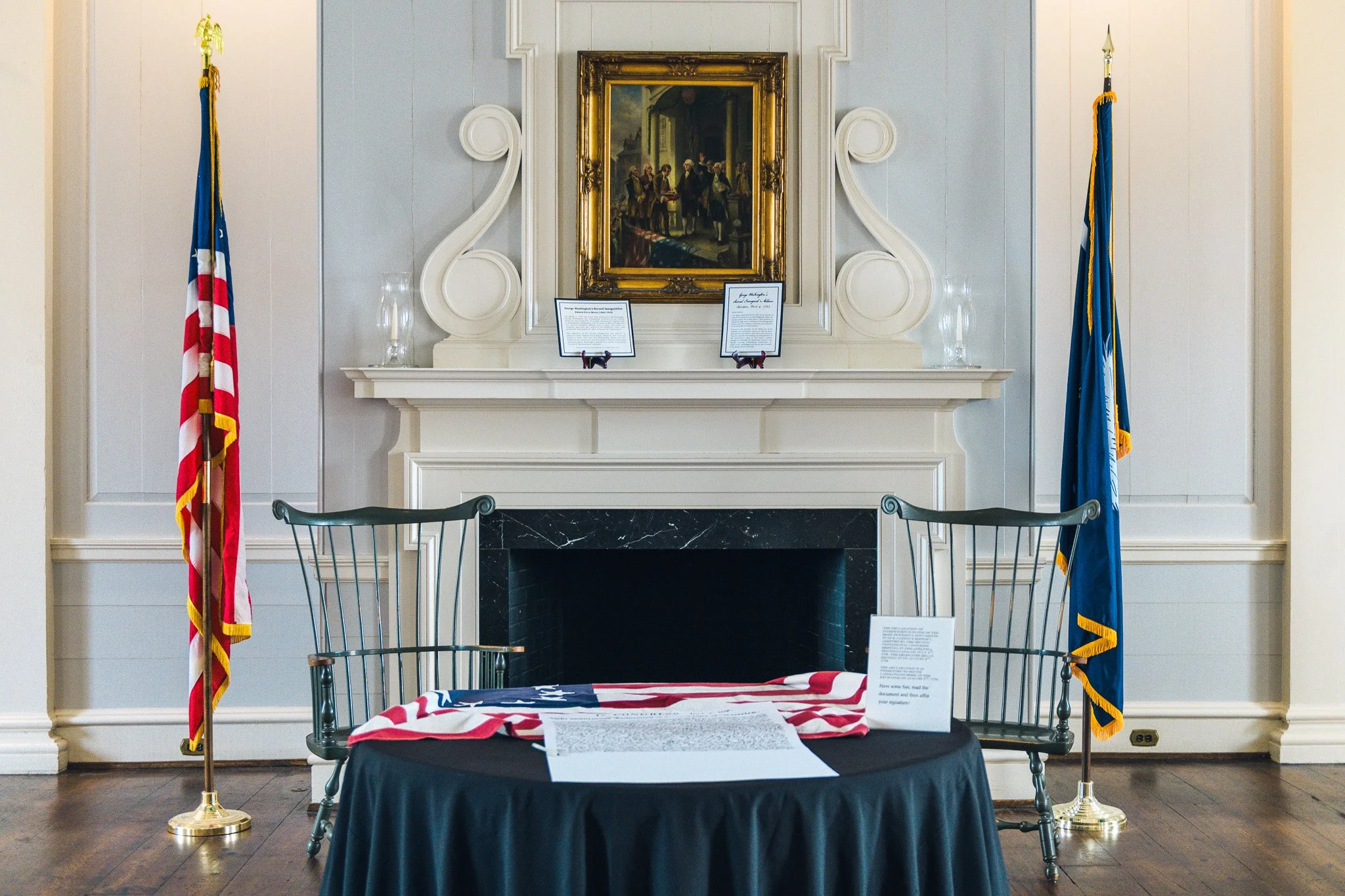
In 1788, the Exchange building hosted South Carolina statesmen and diplomats as they debated and approved the U.S. Constitution. This was fitting as the building had previously been a meeting place for local Patriots. Today, the Old Exchange building is one of only three structures remaining where the U.S.’s founding document was originally ratified. In 1791, city leaders entertained newly elected President George Washington at the Exchange with a series of lavish dinners, concerts, and dances, attended by hundreds of members of Charleston’s elite. In the years between the Revolutionary War and the Civil War, the Exchange was Charleston’s most common destination for public slave auctions, making the site one of the most important in the history of the domestic slave trade.
Visitor Information
📅 Open Monday - Saturday 9am - 5pm & Sunday 11am - 5pm.
🎟️ Admission prices:
Adults - $16
Children (7-12) - $12
Children (0-6) - Free
Powder Magazine Museum
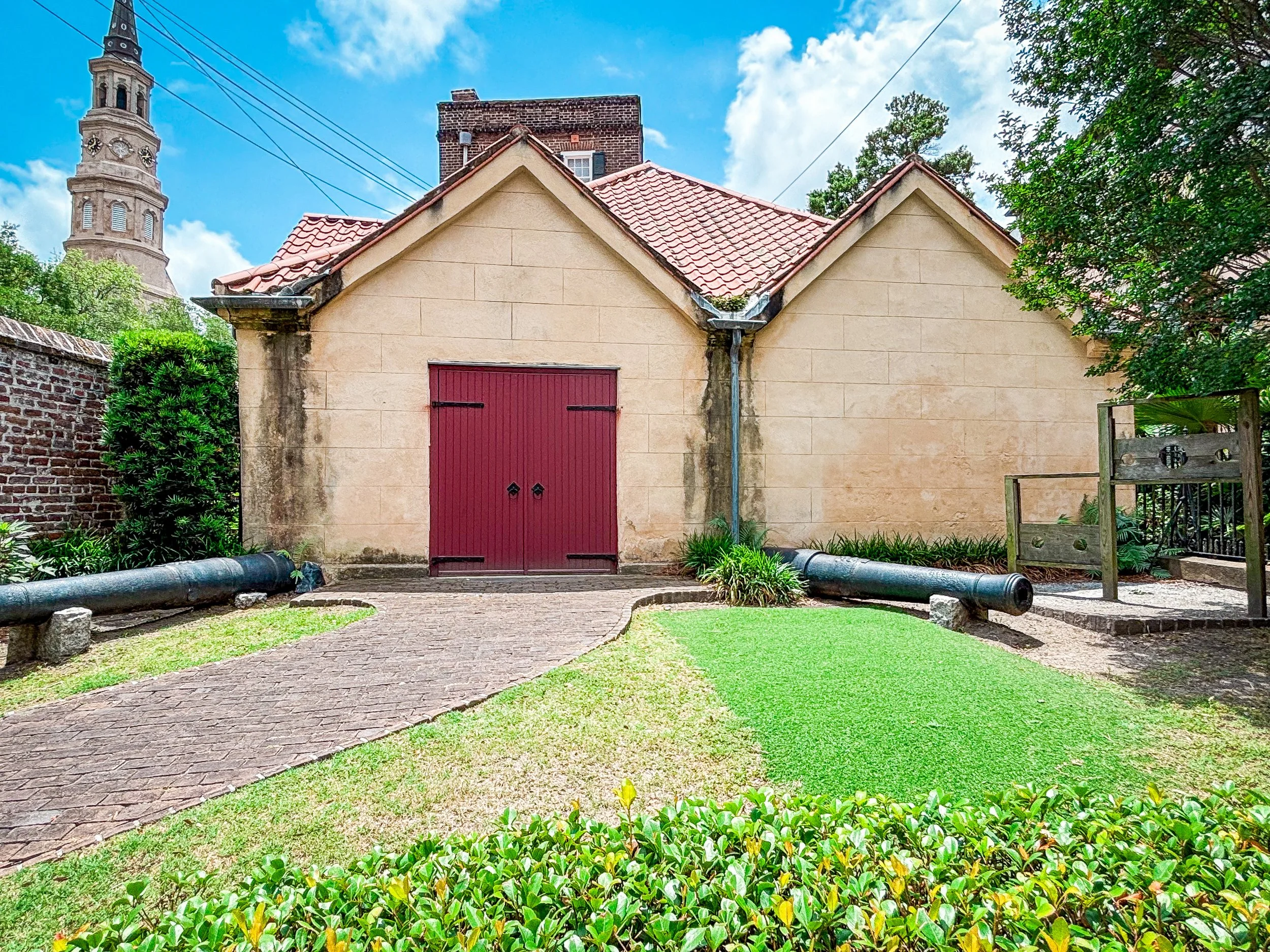
The Powder Magazine is a gunpowder magazine and museum at in the heart of downtown historic Charleston. Completed in 1713, it is the oldest surviving government building in South Carolina. Used for gunpowder storage from 1713-1748, it was key during the American Revolution to defend the city. The National Society of The Colonial Dames of America in the State of South Carolina purchased the building in 1902 to save it from demolition. The Powder Magazine was put on the National Park Service’s National Register of Historic Places in 1972 and designated a National Historic Landmark in 1989.
The Powder Magazine is a single-story square structured building with stuccoed brick walls 32 inches thick. Each wall has a large arch at the top with the thickness here only a few inches. This was purposefully done: in the event of an explosion, most of the explosive force would exit through the roof, with the archs acting like funnels. Tons of sand stored in the roof would then smother and put out the fire.
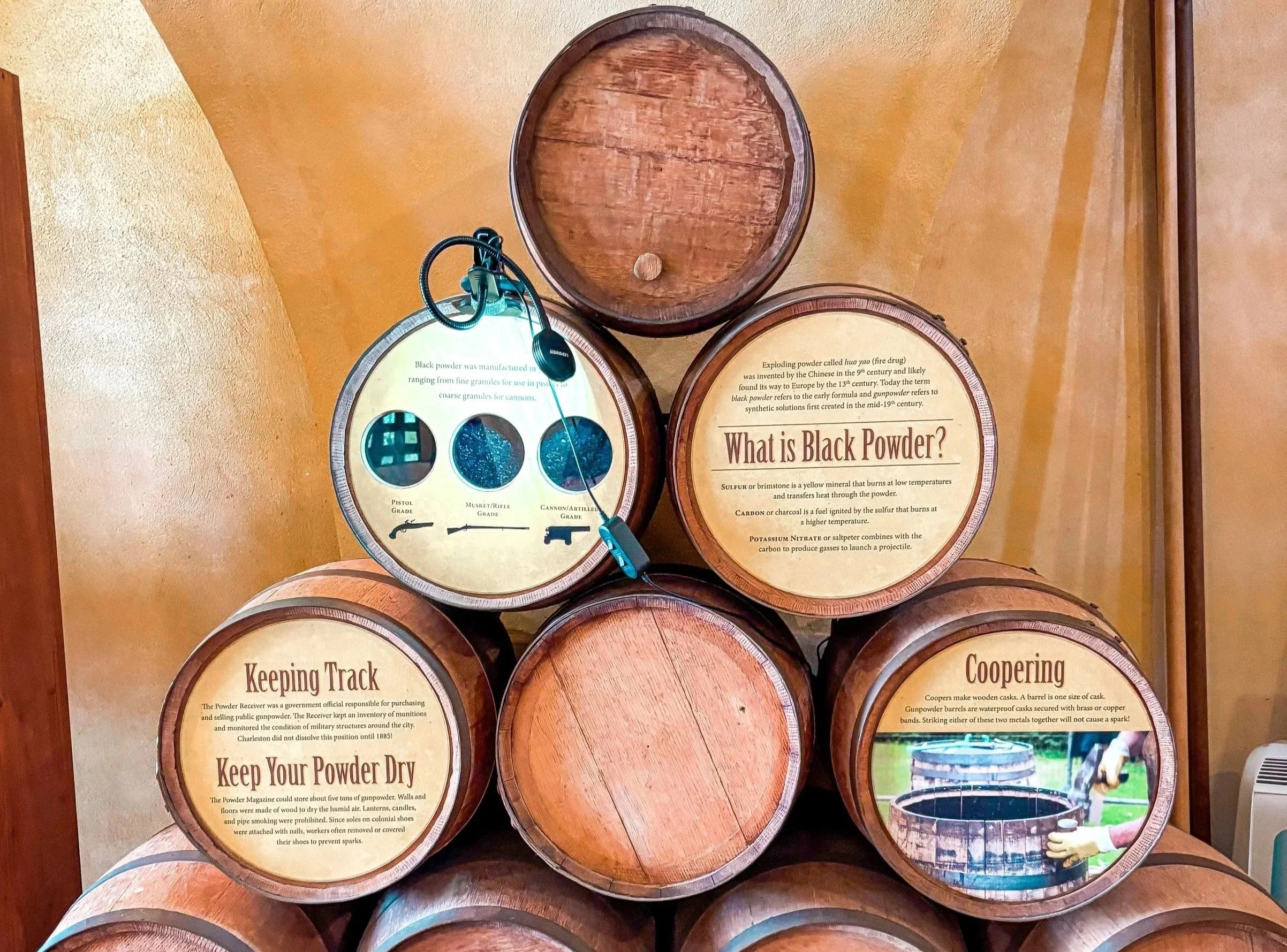
Today, the Museum has historic artifacts and displays about the building during the Colonial and American Revolution periods. These include several cannons, guns, gunpowder barrels, and a pillory. The museum also has a section on pirates including the story of Major Stede Bonnet, “The Gentleman Pirate”. When I visited recently, the guide on staff, Dennis, was super friendly and knowledgeable about the building and it’s long, storied history. He also let me hold three of the muskets/guns they have and boy, they’re heavier than you think. Thanks again Dennis!
Visitor Information
📅 Open Friday - Saturday 1pm - 4pm. Closed Sunday - Thursday.
🎟️ Free admission. However, you can donate as little or as much as you want to help keep this historical site up and running.
South Carolina Historical Society
With over 320 years of history, the South Carolina Historical Society is a treasure-trove of information. Their mission is “to collect, preserve, and share the stories of all South Carolinians and use these stories — from significant historical events to everyday moments — to promote visibility, understanding, engagement, and conversation. The story of South Carolina is the story of America. As such, it reflects the achievements and the challenges, the successes and the failures, of the American experiment.”
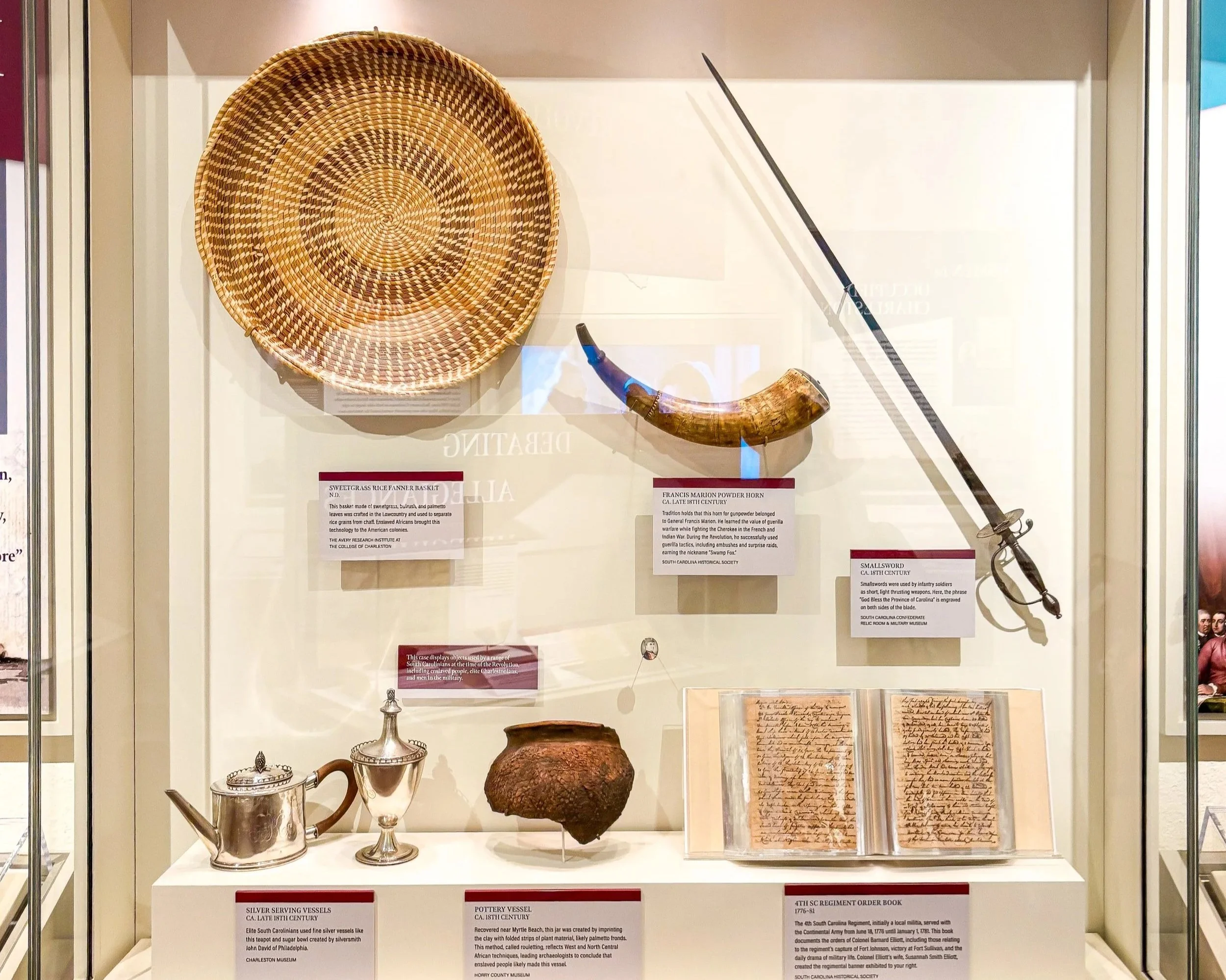
There are six permanent exhibits in South Carolina Historical Society including Gallery 6 - Voices of Revolution. This exhibit celebrates the 250th anniversary of the American Revolution with original manuscripts and priceless artifacts highlighting the struggles, dreams, and triumphs of all South Carolinians in the war for American Independence. One such artifact is Francis Marion’s Powder Horn. Marion, a American military officer, learned about guerrilla warfare when fighting the Cherokee in the French and Indian War. During the American Revolution, he successfully used guerrilla tactics like suprise raids and ambushes against the Birtish, earning the nickname “Swamp Fox.”
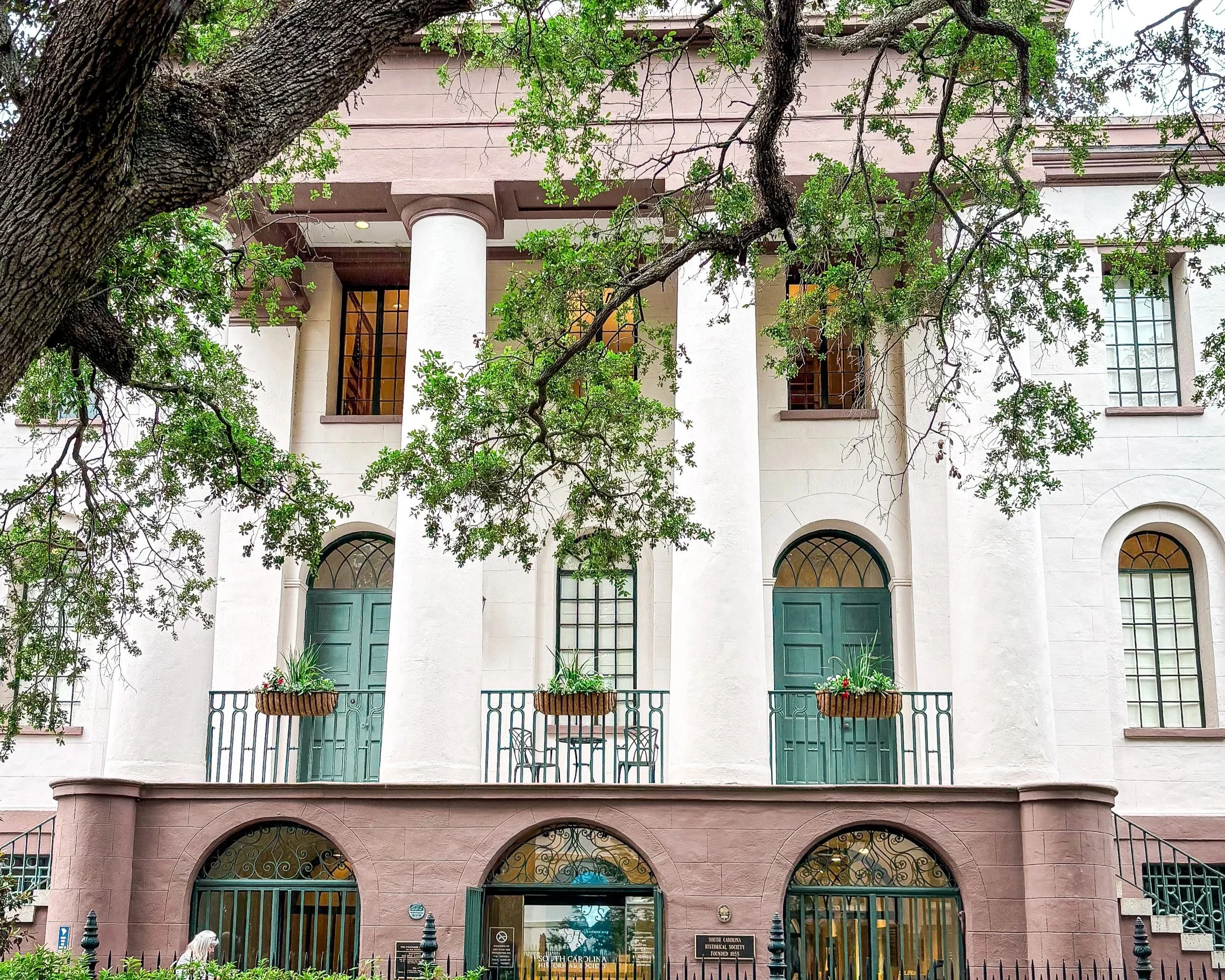
The Historical Society headquarters is housed in the newly remodeled, repurposed Fireproof Building (also a National Historic Landmark). Constructed between 1822 and 1827, the Fireproof Building is believed to be the first of its kind constructed in the United States. The staff are incredibly friendly and welcoming, especially Mitchel, the Guest Services Assistant. He was very knowledgable and gave me some great suggestions on places to eat around town. Thanks aging Mitchel!
Visitor Information
📅 Open Tuesday - Saturday 10am - 4pm. Closed Sunday - Monday.
🎟️ Admission prices:
Admission Price: $1
Children 5 years and under: FREE
Happy travels!!